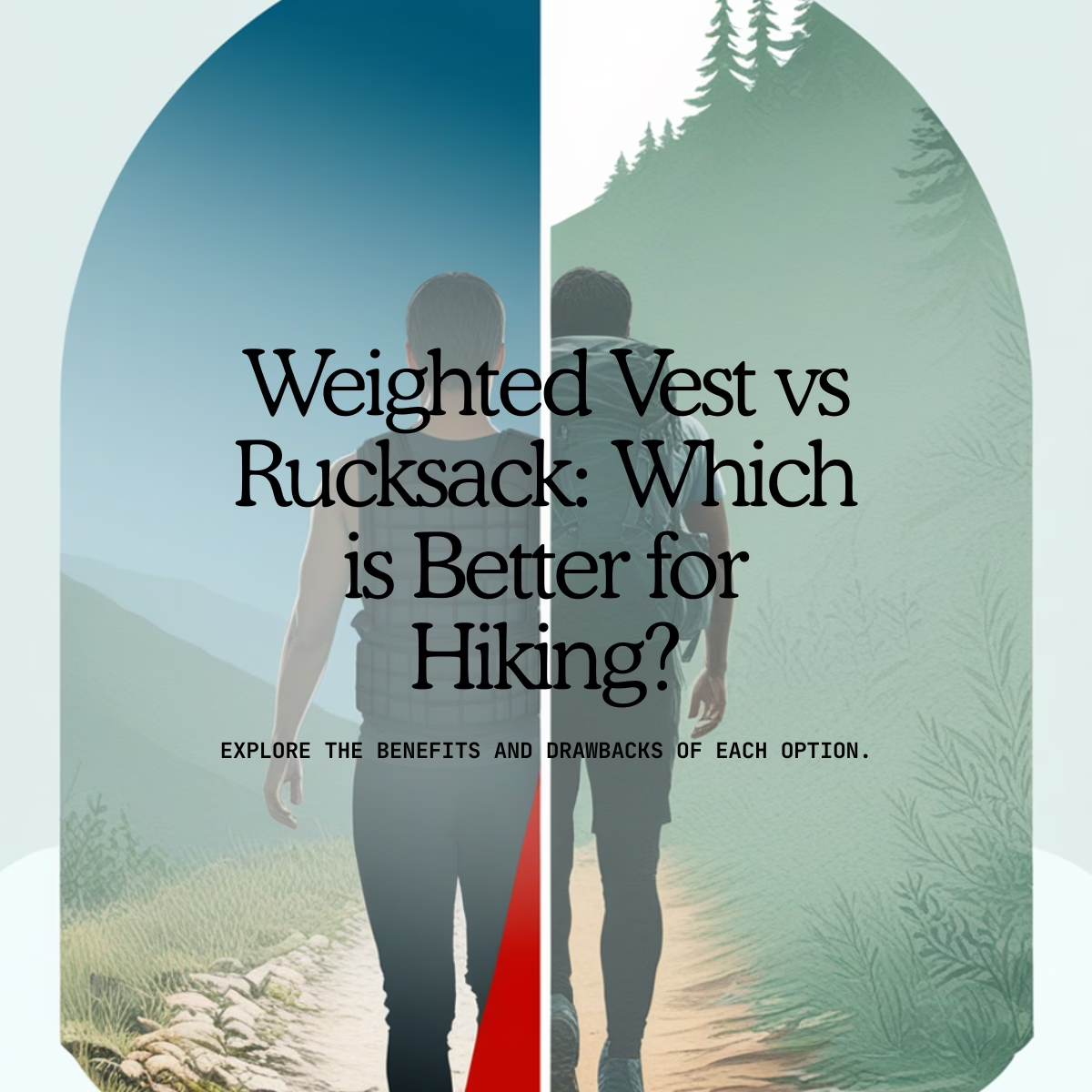
Adding external load to a hike raises the work your legs, lungs, and core do on every step. A weighted vest and a rucksack both add resistance, but they place that load on your body in different ways. Load position changes how you stand, how freely you breathe, how stable you feel on uneven ground, and whether you can carry water and layers for a longer day.
Match the tool to your goal: short fitness sessions favor a snug vest; distance, heavier loads, and trail utility favor a rucksack.
Sponsored content: Sand & Steel Fitness was paid to research, fact-check, and write this article.
What Is a Weighted Vest for Hiking?
A weighted vest is a fitness garment that fits snugly against the torso. Unlike a backpack, it distributes weight across the front and back. Most tactical or fitness vests use fixed weight blocks or adjustable pockets for iron plates or sandbags so you can change the load.
Because the weight wraps close to the ribs and core, a weighted vest for rucking (paid link) sits near the body’s natural center of gravity. When fitted well, the vest moves with your torso on steep drops, log steps, and direction changes, with little bounce or sway.
Typical use cases
- Short hikes and urban trails — quick sessions on paved paths or neighborhood hills
- Fitness-focused walking and hiking — more cardiovascular demand without a long time commitment
- Shorter conditioning efforts — for example, a focused 45-minute power walk
What Is a Rucksack (Weighted Backpack)?
A rucksack is a sturdy backpack built to carry substantial weight on your back. Whether you use a purpose-built rucking pack or a traditional internal-frame hiking pack loaded with plates or gear, the load sits behind your vertical axis.
A rucksack relies on your shoulders, upper back, and — when it has a hip belt — your hips to support the load. The rearward pull often leads to a slight forward lean so you stay balanced over your feet. How much the load shifts depends on strap tension and how the pack is packed and engineered.
Typical use cases
- Long-distance hiking and backpacking prep
- Load-carriage training that mirrors occupational or military pack work
- Multi-hour endurance sessions that build capacity in the feet, ankles, knees, hips, and back
Weighted Vest for Hiking: Pros and Cons
Advantages
- Even load distribution: Front and back loading often supports a more upright torso at light-to-moderate loads
- Core and upper-back engagement: Both sides of the torso share the work of stabilizing the load
- Stable on technical terrain: Useful where a shifting pack would challenge balance
- High training density: Helps keep heart rate elevated on shorter hikes
Disadvantages
- Limited comfortable capacity: Many vests feel bulky above roughly 20–30 lbs
- Chest compression: A snug fit can make deep breathing harder on steep climbs
- Heat retention: Full torso coverage traps warmth and raises sweat rate
- Comfort over long days: Localized chest pressure can become fatiguing after a few hours
Rucksack for Hiking: Pros and Cons
Advantages
- Higher load capacity: Quality packs can carry 40, 50, or 60+ lbs when you are prepared for that load
- Open chest for breathing: The front of the torso stays free for full inhalation
- Better front ventilation: Air can move across the chest and stomach more easily
- Storage and utility: Room for water bladders, snacks, rain layers, and emergency gear
Disadvantages
- Rear-heavy leverage: Poor packing or excessive load can pull posture into a rounded upper back
- Shoulder and lower-back demand: Without a well-fitted hip belt and smart packing, traps and lumbar muscles fatigue faster
- Packing skill matters: Heavier items belong high and close to the spine so the pack tracks with your body
Weighted Vest vs. Rucksack: Comparison
| Feature | Weighted Vest | Rucksack (Weighted Backpack) |
|---|---|---|
| Comfortable weight range | About 5–30 lbs for most users | About 20–60+ lbs with good fit |
| Load position | Wrapped around the torso | Concentrated on back / hips |
| Breathing freedom | Often restricted at higher loads | Chest stays open |
| Gear storage | None to minimal (keys / phone) | High (water, food, tools) |
| Best duration | Under about 90 minutes | Multi-hour to full-day |
Comfort over time
For a short, focused workout, a well-fitted weighted vest often feels more comfortable because it does not hang entirely off the shoulders. For hikes past roughly two hours, a rucksack usually wins: freer breathing, less chest heat, and room for the gear a longer day requires.
Load capacity
If you want progressive overload into higher loads, a rucksack scales more comfortably. Vests tend to get bulky as weight climbs; a good pack can settle heavy plates close to the spine and shift load to the hips with a belt.
Stability and movement
A weighted vest stays close to the body. On rock steps, steep grades, and quick direction changes, that stability helps. A rucksack always has some lag as the pack mass follows a split second behind your torso — minimized by tight packing, but never zero.
Training effect
A vest often raises heart rate and breathing rate quickly on shorter efforts, partly from torso loading and a snug chest fit. A rucksack builds systemic endurance for real pack travel — traps, lower back, hips, and feet under sustained rearward load.
Best Use Cases for Each Option
When a weighted vest is better
Choose the vest when the primary goal is cardiovascular fitness in a short window.
- You have about 45 minutes on a local park trail and want a denser session
- You mix hiking with bodyweight stops (for example, a mile of trail, then squats and push-ups, then hike again)
- You want speed and agility on steep, short climbs
When a rucksack is better
Choose the rucksack when the goal is distance, outdoor utility, or backcountry readiness.
- You are preparing for a multi-day backpacking trip or a loaded fitness test
- You need to carry several liters of water, a first aid kit, and food for a full day
- You want structural stamina over 5 to 10 miles of trail
Injury Risk and Safety Considerations
Both tools can stress joints and soft tissue when load jumps ahead of fitness or fit is poor.
- Spinal alignment: A heavy or poorly packed rucksack can encourage excessive lumbar extension or a rounded upper back. Ease load and improve packing before symptoms build.
- Shoulder strap pressure: Heavy pack straps can compress nerves near the shoulders and cause temporary finger numbness if padding and hip-belt transfer are inadequate. Adjust fit or reduce load.
- Breathing and altitude: A tight vest can encourage shallow breathing. If you have respiratory concerns or train at high altitude, favor a looser fit, lower load, or a pack with an open chest — and get clinical guidance when needed.
Progress gradually. A common starting heuristic is roughly 10% of body weight, then add only a few pounds at a time once you can finish the target distance with solid posture and no lingering joint pain the next day. Treat that as a guideline, not a rule — training history and recovery matter more than any fixed percentage.
Training vs. Exploration: Different Goals, Different Tools
The practical question is simple: Are you training, or are you exploring?
- The weighted vest is a fitness tool. It raises heart rate and training demand in a compressed timeframe. It treats the hike like a conditioning session.
- The rucksack is an endurance and utility tool. It mirrors carrying supplies from point A to point B. It treats the hike like a journey that may need water, layers, and food.
A heat-trapping heavy vest on an 8-mile mountain day often ends in overheating and misery. A bulky, loosely packed rucksack on a 20-minute neighborhood power walk often feels clumsy. Use the tool that matches the day you are actually doing.
Hybrid Strategy: Using Both Together
You can periodize both tools across a week.
- Weekdays (vest): Tuesday and Thursday evenings — short, higher-intensity 45-minute hill sessions to keep cardiovascular capacity sharp
- Weekends (rucksack): Saturday morning — a longer, lower-intensity trail hike with water, layers, and a training plate to build deep-tissue stamina for real trek loads
Final Verdict
There is no single “best” choice between a weighted vest and a rucksack. Distance, how much you need to carry, and what you want from the session decide.
If you are newer to loaded hiking or focused on backpacking prep, start with a rucksack. You may already own a sturdy pack, you can carry water and snacks, and you can build foundational endurance over longer distances with realistic utility.
If the goal is metabolic conditioning and denser training in limited time, a well-fitted weighted vest turns short local loops into harder sessions without rear-pulling pack leverage.
For athletes who train both ways, use the vest for quick weekday hill work and the rucksack for multi-hour weekend adventures. Treat the vest like a gym session and the rucksack like a journey — and choose the one that matches your trail goals.